Twenty years ago this year, Scotland first started to offer everyone free NHS eye examinations. It’s the kind of anniversary most people walking into their local opticians are unlikely to know about, but for one Glasgow family, it’s part of their history.
Frank Munro, a founding member of Optometry Scotland and owner of Munro Optometrists, spent years lobbying Scottish Government, along with colleagues, to bring in the contract that made it happen. General Ophthalmic Services (GOS), launched in 2006, funds routine eye examinations and made testing free for everyone in Scotland, not just certain groups.
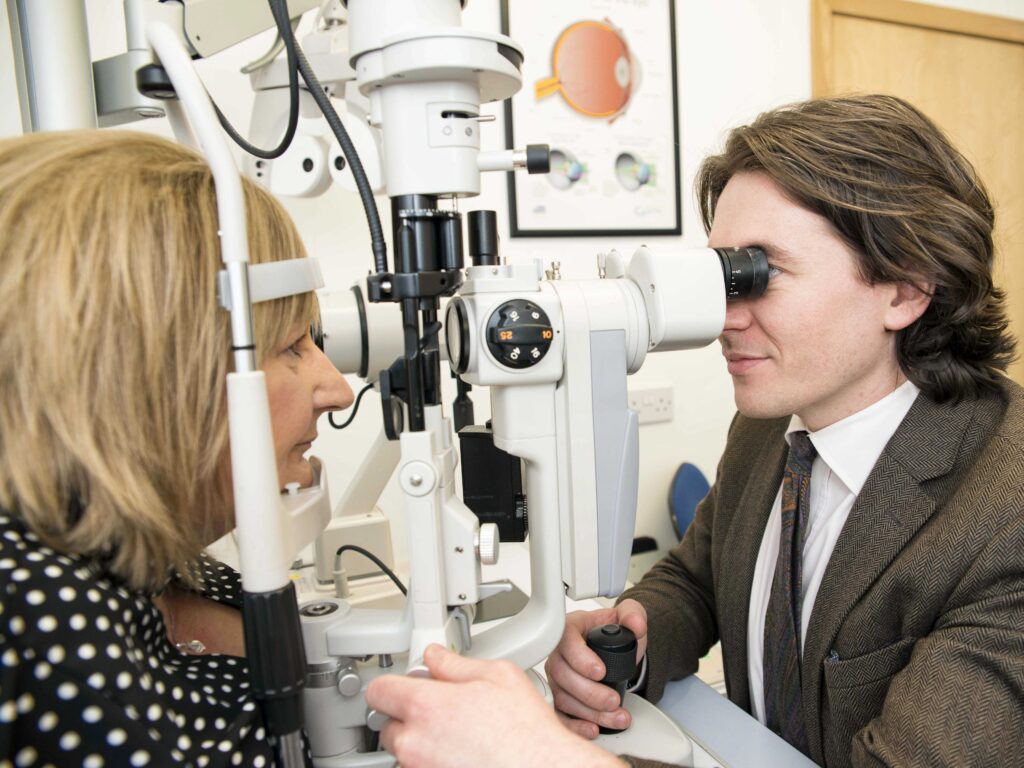
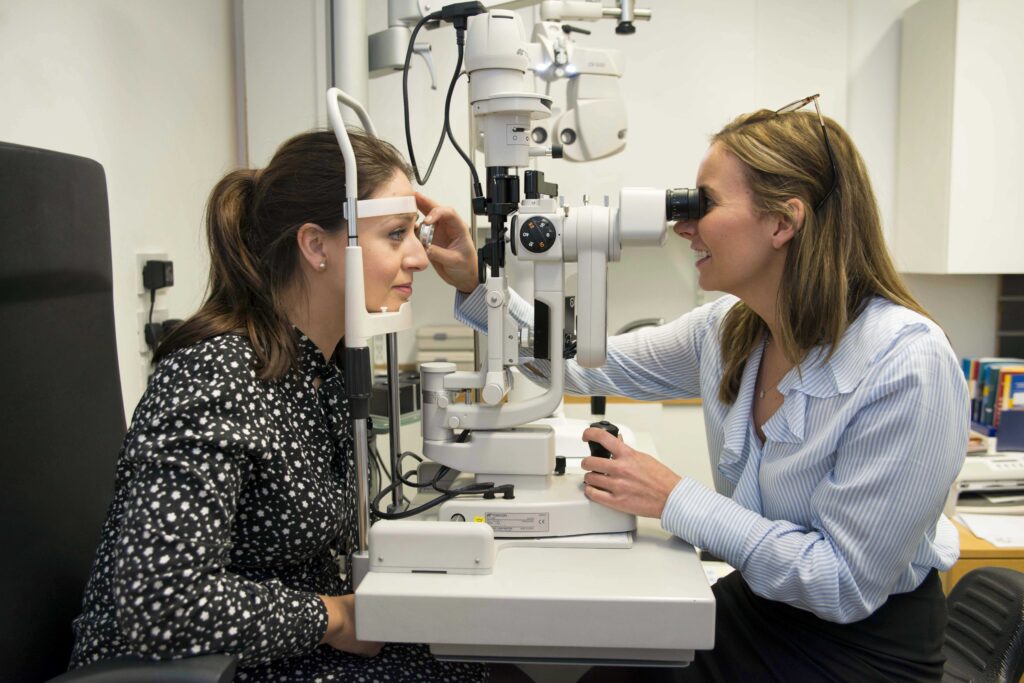
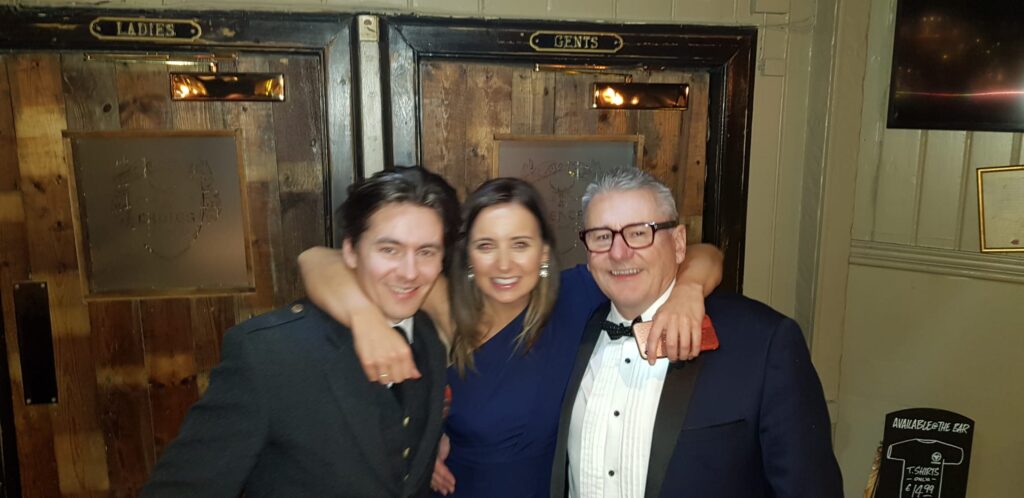
Two decades on, his son Mark, 40, and daughter Anna, 37, both followed him into optometry, working across the family’s practices, while Frank continues to play a leading role for the sector.
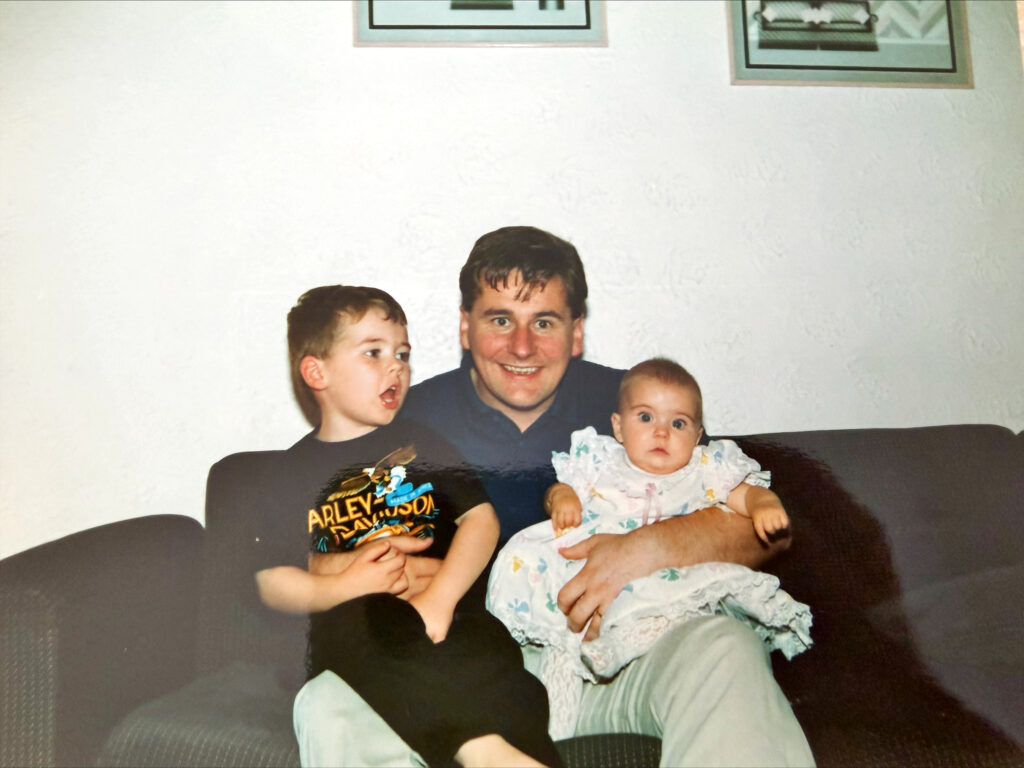
Mark doesn’t know a time when the family business wasn’t part of his daily life. In operation for more than four decades, some of Mark’s earliest memories are wrapped up in the firm, whether it’s waiting in the practice while his dad finished up before they went to the football together or tagging along on deliveries to Cumbernauld with his mum, a director of the business at the time, after school. “It was a bit like an extension of the home,” he says. “It’s just another place to be.”
His early involvement was more casual than any proper start when he was brought in for odd jobs in his late teens, transferring paper cash sheets onto Excel before working in bars and shops during his degree. He returned part-time shortly before optometry took hold, running lab deliveries around an evening tech support job, then covering reception – by his own admission, badly – as he applied.
These first steps didn’t automatically decide his career. He initially avoided optometry, studying immunology and microbiology at the University of Strathclyde. “I was learning the magnitude of what my dad had done in this profession,” he explains. “I felt I couldn’t compete with that. I didn’t think I’d be good enough.” It was only when he toyed with the idea of teaching, and Frank suggested optometry again, that it took hold.
Joining the business came with pressure. “You don’t want to let anybody down, you don’t want to make mistakes,” Mark says, “but you also want to prove you’ve got your own abilities, your own worth – that you’re not just there because your dad owns the place.”
Mark is clear that his father never pushed either of his children towards the family profession, “It was always mentioned, but it was never really pushed.” However, Frank was an influence regardless.
These days, patients often clock the resemblance before Mark introduces himself. “I genetically can’t really hide that I’m his son,” he says, and some have been coming to the family’s practices since Frank first opened them, spanning generations of their own families as well as his.
Anna’s route was more straightforward. While at school and weighing up degrees, she was working Saturdays in the practise for pocket money, observing Frank. “I noticed how much he loved going to work every day,” she says, “and I thought, if I could get to 50 and still love what I do, then I’d be very lucky.” So she gave optometry a go.
Mark says Frank was “definitely proud” when he and Anna both chose optometry, even if he never made a thing of it. A rare moment of the industry figure stepping back and letting the family story speak for itself.
For Frank, the anniversary is less personal reminiscence than a chance to take stock. “At the beginning of 2006, a patient I identified with suspected glaucoma would start a long paper trail,” he says, “facing delay and no way to send images digitally.”
Two decades on, “more than 80% of eye emergencies are now managed entirely within community optometry,” Frank says, and around a third of Scotland’s optometrists have trained as independent prescribers against fewer than one in ten in England.
He’s candid about what hasn’t gone to plan. Eye health promotion for vulnerable communities, and “a decade of stagnant fees” that pressured practices before a guaranteed annual review was secured but his overall verdict is clear. “Twenty years of GOS has provided clear evidence that optometry-led eyecare works and has benefited all communities across Scotland,” he says.
Mark believes that the more immediate legacy sits closer to home: a business now spanning six branches from Bridgeton to Kilmacolm, still largely run by family, and still occasionally interrupted at Sunday dinner by shop talk someone eventually has to call time on. He won’t push his own two children towards optometry any more than Frank pushed him or Anna. “I’d rather they just find something they really believe in,” he says. “That’s what’s more important.”
A version of this article is also available to read in the Sunday Post.